
When is a baby ready for sleep training?
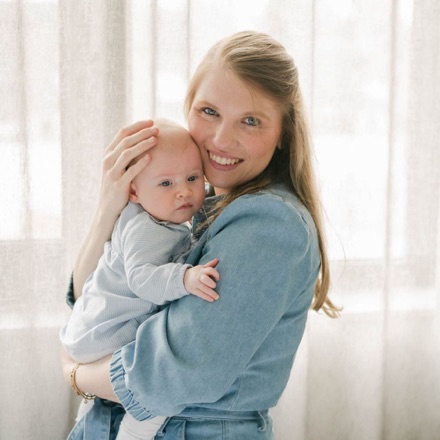 Kyra Hendrix, certified Gentle Sleep Coach® trained in the Kim West method · updated November 8, 2026
For babies from 4 months
When to start sleep training: at the earliest after the 4 month sleep regression, for some children only around six months. Kyra works with three pillars that all need to stand: a fixed routine with practiced gentle techniques, enough sleep and food during the day, and the green light from your pediatrician.
There's no deadline. There's no age at which it has to happen, and there's no other baby you have to compare yours with.
That sounds obvious, but it's the most important part of this whole topic: your baby's biology can't be rushed. If you start too early, there simply aren't any ways yet for your baby to comfort themselves. Then it doesn't work, and you've both had a hard week for nothing.
Why that line sits at the regression
During the regression the sleep structure is changing, and your baby is learning how to link sleep cycles. Putting coaching on top of that is asking for resistance. See what happens in that phase.
Temperament sets the pace
A flexible baby, who handles change easily, can take steps faster.
An alert, active baby has more trouble with new things and is harder to comfort. There you go slower, with smaller steps. Not because it's going less well, but because that's what fits.
The three pillars
If they're not all three standing, it's not the moment yet.
Pillar 1: the gentle foundation is there
- There's a consistent sleep routine, and your baby recognizes it as the start of the night
- Bedtime is predictable, and getting up happens at about the same time too
- You've practiced successfully with the gentle techniques: the switcheroo, or jiggle and soothe
That third one is the most important. If your baby has never fallen asleep any other way than the familiar one, coaching is too big a step all at once.
Pillar 2: a full tank during the day
- Enough sleep during the day, and naps that go more easily: 30 to 45 minutes or longer each time
- Enough feeds and calories during the day
A baby who sleeps too little or drinks too little during the day makes up for it at night. Then you're working against hunger and overtiredness, and they win.
Pillar 3: green light
No underlying cause like reflux, and no medical doubt. Discuss it with your pediatrician if you're not sure.
Where you start
At bedtime, and only there. Not with the naps.
The reason is simple: at the start of the night sleep pressure is highest, and that's when falling asleep independently is most achievable. Naps are harder and come later.
And what about you
Kyra names this explicitly, and it's almost never said: you need to be ready too. This asks for a few consistent weeks at a moment when you're probably already tired. If you don't feel that room, don't do it. The pause button is always within reach, and using it isn't failing.
If daytime feeding is so-so and nighttime feeding is eager, start there: turning reverse cycling around is a condition before coaching can achieve anything.
If your baby rolls over on their own by now, something changes about the night. See rolling over and sleep.
If you've already started and it isn't working, read why sleep coaching gets stuck.
Know someone going through this right now?
Send them this article with one tap.