
How do you get twins on the same sleep rhythm?
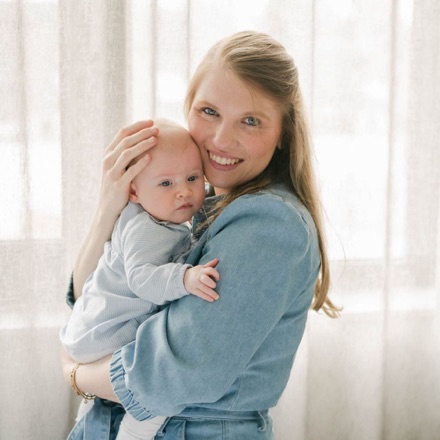 Kyra Hendrix, certified Gentle Sleep Coach® trained in the Kim West method · updated November 8, 2026
A twins sleep schedule starts with a week of tracking: you need to know who sleeps worse and who wakes the other. Then sync the rhythms at night and in the morning: if one wakes for a feed, feed both, and gently wake the other within 30 minutes in the morning. Coach both at once.
With two children, everything one does affects the other. Waking each other now and then is very normal, and that's why the approach starts in a different place than with one child.
Two children, two different sleepers
Being twins doesn't mean they have the same sleep needs. With identical or fraternal twins alike, those can be very different. Look at the individual, not at "the twins"; their temperament often plays a part.
What they do share is the daily schedule. Start on that from the very beginning: rhythm is your best friend.
Work with the corrected age
Twins are often born early. If your baby was born more than 3 weeks early, always work with the corrected age. That way you know when your baby is in a regression or a leap.
Step 1: track for a week who wakes whom
Kyra's first step isn't changing anything but tracking for a week. You need to know two things before you do anything: which of the two sleeps worse, and who wakes the other. Write down:
- the feeding times, day and night
- the daytime naps, with start time and length
- bedtime, and how long it takes to fall asleep
- the night wakings: time, length, what happened, and whether baby A woke the other
Pay special attention to that last line. Without that note you pull on the wrong child: it may well be that one sleeps fine and only wakes because of the other. Confronting, Kyra admits honestly, and crucial for your sleep plan.
Step 2: together or apart in the room
There's no right or wrong. Choose what fits your family.
Sleeping together is about the emotional bond and comfort: it gives a feeling of safety, they learn each other's rhythms and develop social skills. The tip that goes with it is white noise, which masks the other's little cries.
Apart is the practical choice, especially with one very good and one poor sleeper. Pay attention to who moves: the poor sleeper stays in the familiar room and the good sleeper leaves temporarily, because the good sleeper copes with change much more easily. Once the poor sleeper sleeps better, the other can come back.
Apart during the day, together at night
Sleep pressure differs per moment of the day. During the day it's low and they keep each other awake more easily: put them apart temporarily then, until sleep goes well. At night sleep pressure is high and they sleep more deeply, so then they can often share one room after all.
Step 3: sync the rhythms
Kyra calls the mechanism the Sleep Engine. If baby A wakes at midnight for a feed, then gently wake baby B afterwards for their feed. That sounds scary, and it's crucial for your night's rest: you set their internal clocks to the same time and avoid running up and down all night.
For the times, the ranges per age apply: wake windows by age.
The 30-minute rule in the morning
The same applies in the morning. If one wakes up, always gently wake the other within 30 minutes. Kyra's example: if baby A wakes at half past six, you wake baby B by seven at the latest. Waking a sleeping child seems contradictory, but this keeps their rhythm in balance for the rest of the day.
Feeds: fixed during the day, together at night
Day and night ask for the opposite. During the day you keep a fixed feeding schedule and wake a baby if needed to stay in the rhythm. That way you give enough calories during the day, to prevent waking from hunger at night. At night you feed on demand, but following the Sleep Engine: if one wakes, you feed both.
Step 4: the sleep environment, and the other room
Dark, calm colors and white noise apply to every child, see setting up the nursery. The twins tip: if they sleep apart, check the other room too.
Tackle the sleep problems at the same time
This is counterintuitive, and still it's Kyra's advice: do the sleep coaching with both at the same time, not one after the other. So getting them to sleep at the same time starts with one approach for both. One shared approach causes the least unrest, especially if they share a room and both sleep poorly.
If they still keep each other awake during coaching, put them apart: you'll see results faster. Once it goes well, they can go back together.
Divide and conquer: who takes which child
The method is the same as with one child, the Sleep Lady Shuffle; only the execution differs. If they sleep in separate rooms, divide the children: one adult per child, so you don't run back and forth at night. If they sleep in one room, you can coach and comfort both from the middle.
If they wake each other, divide and conquer applies: one parent comforts child A, the other child B, always calm and predictable. Agree beforehand who does what, and which child responds better to which parent. See also why sleep training isn't working.
It takes longer, and that's part of it
Coaching twins costs more time and energy than with one baby, and often takes a little longer before you see lasting improvement. Kyra's image: you don't learn to walk in two days, and you don't learn to sleep independently in two days either. Keep it up consistently, and in the end they'll sleep through together.
More on choosing between methods: sleep training methods compared.
Know someone going through this right now?
Send them this article with one tap.